


Jensen Huang's Nvidia return offers China a possible opening in US tech standoff
Beijing may view the episode as a sign of Trump's willingness to intervene to protect business and market interests, but restrictions on advanced chips remain a major obstacle to better ties
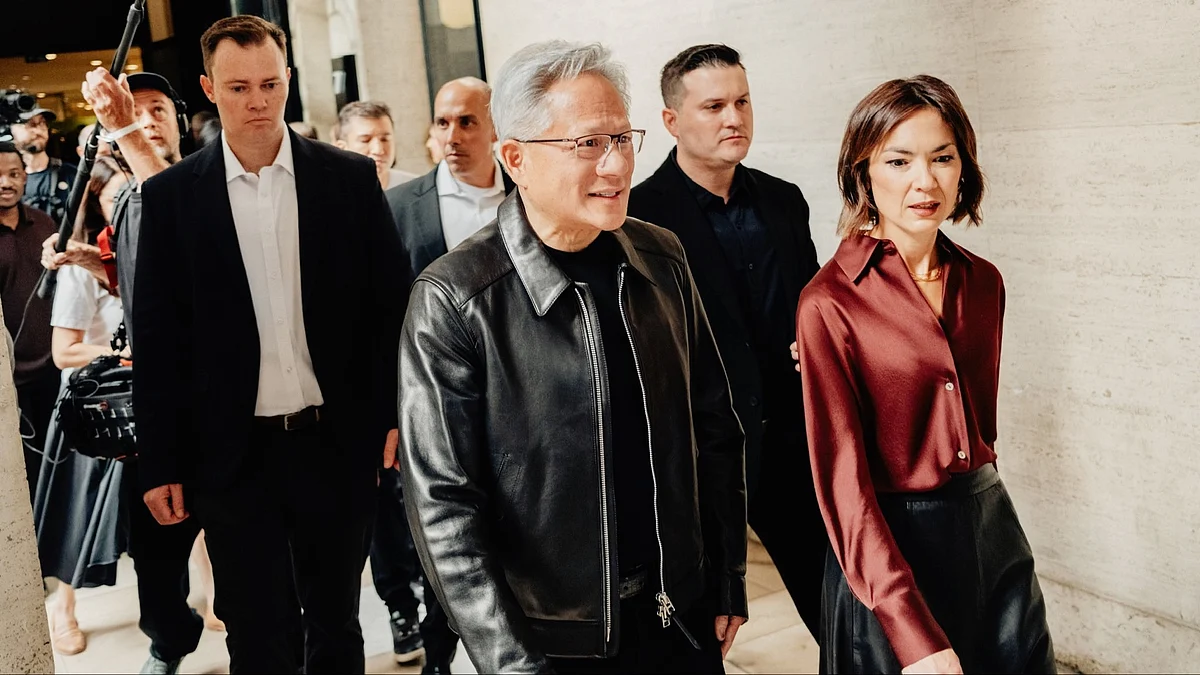


Jensen Huang's return as Nvidia chief executive has attracted widespread attention, including in China, where the development became the most discussed topic on Weibo, the country's biggest social media platform. For Beijing, however, the episode carries implications beyond the reinstatement of the influential billionaire, offering a possible insight into US President Donald Trump's priorities in the technology rivalry between the two countries.
Many Chinese social media users welcomed Huang's return. The Nvidia chief has previously said he loves China, and videos of him eating noodles and drinking milk tea during a visit in May had attracted considerable attention. Some users also commented on his appearance in a video showing his return to Nvidia's headquarters, wondering why he was not wearing one of his trademark leather jackets.
For some in China, Huang's return has been seen as a vindication amid allegations that one of the women with whom he had an affair had been recruited by China's Ministry of State Security as a spy.
Beijing has dismissed the allegations, while Chinese state media have portrayed the controversy as a smear campaign by China hawks in Washington. The Global Times, a Communist Party-affiliated newspaper, described it as a "witch hunt".
The White House and Trump have also said Huang poses no national security threat, although investigations into the allegations are continuing.
The episode could offer Chinese President Xi Jinping insights into Trump's priorities, particularly his concern about maintaining stability in financial markets and the US technology sector.
Huang's reinstatement came soon after Xi's meeting with Trump in Shenzhen last week. Trump has said the two leaders discussed Huang, although he did not disclose details of the conversation. Beijing has not commented on the matter.
The controversy has also highlighted divisions within Washington over how to deal with China's technological ambitions. One camp favours restricting Beijing's access to advanced technology on national security grounds, while others, including Huang, have argued that export restrictions could encourage Chinese companies such as Huawei to develop their own alternatives while shutting US firms out of the world's second-largest economy.
Huang's return, however, does not necessarily signal any easing of restrictions on advanced chip sales to China. The issue remains a major point of contention as Washington and Beijing seek to negotiate a trade agreement ahead of another expected meeting between Trump and Xi in December.
The US Bureau of Industry and Security is tightening restrictions not only on direct exports of advanced chips to China but also on Chinese companies' access to computing power through data centres overseas.
The measures are intended to close potential loopholes that allow Chinese firms to access advanced Nvidia and AMD chips through cloud service providers in third countries, including Singapore, Malaysia and Thailand.
China has yet to announce any retaliatory measures. However, any escalation could affect financial markets and US companies across sectors, including automobile manufacturing, defence and semiconductors, which depend on rare earth minerals.
Beijing has previously used its dominance in rare earth supplies as leverage in trade negotiations with Washington. A fresh confrontation over chip exports could prompt another round of retaliatory measures, with consequences for both countries' economies.
The broader dispute is increasingly centred on control over critical technologies and minerals, which could shape the economic and military power of both countries. Trump's tariffs are no longer the only major issue in the relationship.
Huang's return may therefore offer Beijing a glimpse of the importance Trump attaches to the interests of major US companies and financial markets. But the controversy is far from over.
Huang is scheduled to testify before the US Congress next month. Lawmakers, including some Republicans, are seeking further answers. Arkansas Senator Tom Cotton wrote on X that the Nvidia controversy was "just the tip of the iceberg" and remained unresolved despite Huang's return to the company.
Join our official telegram channel (@nationalherald) and stay updated with the latest headlines